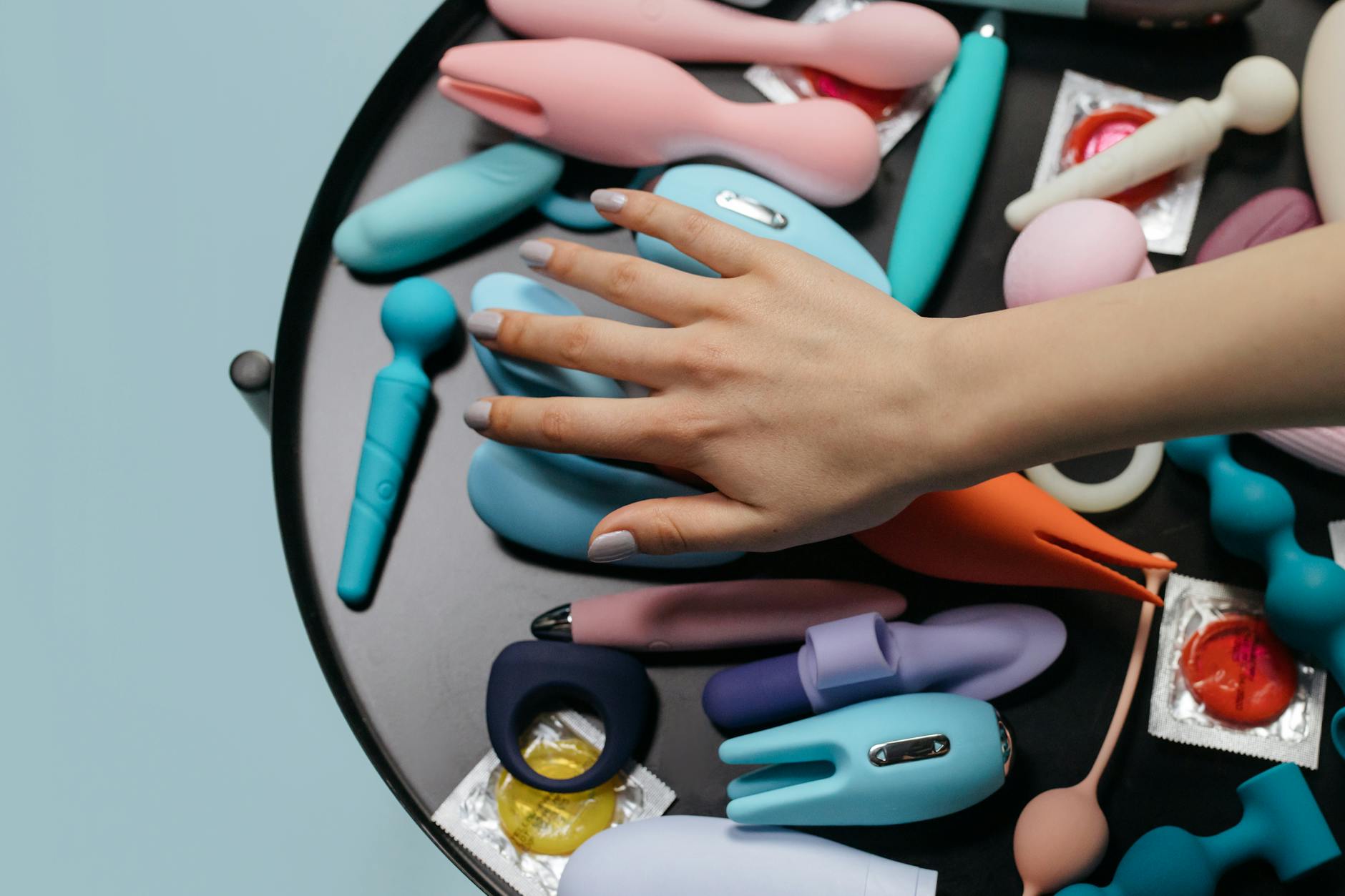
Let's be real about the thirties shift
Your pleasure landscape changes in your thirties. Not because anything is broken. Not because you're getting older in a bad way. But because hormones, stress, relationships, careers, and your nervous system all conspire to rewire how your body responds to touch. Most people don't talk about it, so you end up thinking you're alone in noticing that orgasms feel different, arousal takes longer to build, or sensitivity isn't where it used to be.
You're not alone. And there's a reason clitoral vibrators like Lemon's become genuinely useful in this decade.
The biological plot twist of your thirties
Your thirties don't bring a hormonal cliff the way perimenopause does later. But they do bring real, measurable changes. Progesterone rises slightly if you're still menstruating. Cortisol patterns shift with the cumulative weight of career demands and life complexity. Blood flow to the genitals changes subtly as cardiovascular fitness matters more and more. The pelvic floor muscles, if they've never been trained, start to lose some elasticity.
Clitoral sensitivity can feel duller. Arousal takes 10 or 15 minutes instead of 5. Orgasms sometimes feel less intense, or they come less reliably. This is not universal. But it's common enough that I see it across relationships and relationship stages constantly in my practice.
Here's what doesn't change: your capacity for pleasure. Your neural pathways. Your ability to feel intensely. What changes is the path to get there.
Why sensation feels different (and what to do about it)
Four main culprits show up in the thirties:
1. Stress load accumulation. By thirty, you've probably got professional stakes, maybe financial pressure, maybe relationship complexity. Your nervous system is genuinely working harder. When you're in a low-grade stress state, blood diverts away from the periphery. The clitoris is peripheral. Less blood flow means less engorgement, less sensitivity, slower arousal. A lemon clitoral vibrator bypasses some of this by providing direct, consistent stimulation that doesn't rely on your body's own lubrication or engorgement systems.
2. Birth control patterns. If you've been on hormonal birth control for a decade, your thirties might be when you notice its cumulative effects on sensation. Some pills suppress testosterone more aggressively than others. By your thirties, you've logged enough time on them to really feel the difference. If this is you, a clitoral vibrator with variable intensity helps because it doesn't require the same degree of natural arousal to produce results.
3. Pelvic floor tension. Not weakness. Tension. Most people with vulvas have never learned to relax their pelvic floor. By thirty, chronic tension from holding stress in the pelvis, from hurried sex, from trying too hard to orgasm, can dull sensation. This is where a lemon vibrator's suction-based stimulation helps specifically. It engages the clitoris without requiring you to coordinate pelvic floor relaxation the same way penetration does.
4. Disconnection from solo pleasure. Relationships happen. Partnership rhythms take over. Solo exploration drops off. By your thirties, some people realize they haven't had truly focused solo time in years. Your body forgets what it enjoys when no one else is involved. Reclaiming that is transformative.
How to adjust your approach
If pleasure feels different in your thirties, here's what I recommend:
Extend your warm-up deliberately. You're not broken if arousal takes 20 minutes now instead of 5. Build that time in. Use the first 15 minutes for mental settling, breathing, touching yourself without expecting results. Then introduce a lemon vibrator. The progression matters more than the speed.
Start at lower intensities. The Lemon clitoral vibrator has multiple settings. If it's new to you, begin at pattern 1 or 2. Your nervous system in your thirties is often more reactive to overstimulation, not less. This isn't weakness. It's just your nervous system's baseline changing. Respecting that makes the experience better.
Use lemon vibrators specifically for the suction sensation. Unlike traditional vibration, suction engages a broader area of the clitoris and the surrounding tissues. For someone dealing with the kind of sensitivity shift that shows up in the thirties, this often works better than point vibration. It's less likely to feel numb or like you're chasing sensation.
Separate pleasure from performance. In your twenties, pleasure and performance often ran together. By your thirties, many people have logged enough partner sex to internalize subtle pressure to perform, to come quickly, to prove they're still responsive. Solo time with a lemon vibrator is the place to drop that. There's no audience. There's no timeline. Your only job is to notice what actually feels good.
When to check in with yourself
If sensitivity shifts feel sudden and total (not gradual), if there's pain alongside numbness, or if pleasure vanishes entirely, talk to a gynecologist. Sometimes a UTI, a dermatological condition, or a medication side effect is the culprit, not just aging. Get that ruled out.
If the shift is more about speed and intensity changing, that's normal. That's what this post is about. But if there's shame layered on top, that's worth examining. Your thirties are not when your sexual peak ends. They're when it often gets more interesting because you finally know what you actually want instead of what you think you should want.
The partner piece
If you're with a partner, the shift might feel confusing to them too. They might think they've done something wrong. They haven't. What helps: separate conversation. "My body is changing" is different from "I'm not attracted to you anymore." One is biological. One is relational. Mixing them creates dead ends.
You might introduce a lemon vibrator to partnered sex. That's a conversation. Some partners love it. Some feel insecure. Neither is wrong. But working through it together, with curiosity instead of defensiveness, usually lands somewhere good. Many people find that how to use lemon vibrators when partners have different pleasure preferences becomes genuinely useful.
Solo pleasure is the real work
Your thirties are when you finally have enough self-knowledge to explore solo pleasure seriously. You know what turns you on. You know what you're tired of. You know your body better. Use that. A lemon vibrator is a tool for that knowledge, not a substitute for it. The magic doesn't live in the device. It lives in you finally giving yourself permission to pay attention.
FAQ
Why does sensitivity change in the thirties if hormones aren't shifting that dramatically?
It's a perfect storm. Stress accumulation, relationship patterns, birth control effects over time, and pelvic floor tension all layer together. None of these alone causes a huge shift. Together they're noticeable. The good news is that once you understand what's happening, you can actually address it.
Can I use the same vibrator techniques as I did in my twenties?
Probably not, and that's fine. Your twenties approach might have been "high intensity, get there fast." Your thirties approach might be "longer warm-up, lower starting intensity, focus on sensation." This isn't regression. It's adaptation. Sometimes adaptation produces better orgasms, not worse ones.
Does this mean my sexuality is declining?
No. This means your sexuality is changing. Declining and changing are not the same thing. Many people report more satisfying pleasure in their thirties once they get over the grief of the twenties version. You're not chasing novelty anymore. You're actually feeling things. That's a legitimate upgrade.
Should I try a lemon clitoral vibrator even if I've never used a vibrator before?
Yes, if you're curious. The suction-based approach is often gentler to start with than traditional vibration. Start at the lowest intensity. You can always increase. And remember that "didn't work right away" often means "I needed more time or a different approach," not "vibrators aren't for me."
What if my partner doesn't want me to use a vibrator?
That's a different conversation than the physical one. Worth asking gently: what's the resistance about? Insecurity that it will replace them? Unfamiliarity? Different beliefs about what sex should look like? Understanding the "why" helps. Sometimes it's about finding a compromise. Sometimes it's about them understanding that your pleasure matters more than their discomfort with a tool.
Is it normal to need longer warm-up time in your thirties?
Completely normal. Arousal latency increases slightly with age, stress, relationship patterns, and hormonal shifts. You're not broken. You're just different than you were. That's expected and manageable.
The actual truth
Your thirties are not when pleasure ends. They're often when it starts getting real because the performance pressure lifts slightly and you finally care more about what you actually feel than what you're supposed to feel. A lemon clitoral vibrator meets you where you are now, not where you were. That's the whole point.
If you're noticing shifts and want to explore what works for your body now, that's wisdom, not surrender. Your pleasure matters. Your body deserves attention. And sometimes the right tool helps you pay that attention.